Aerospace Titanium Parts
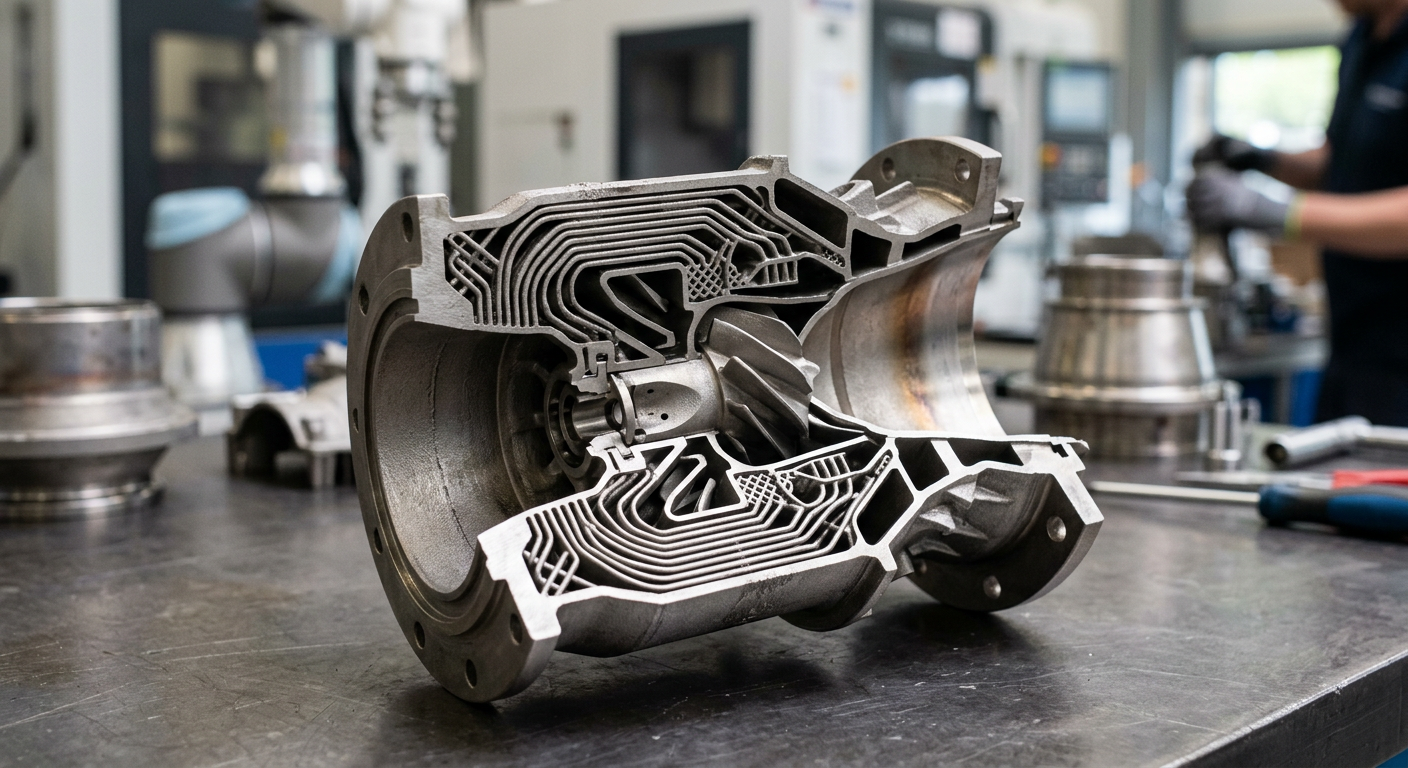
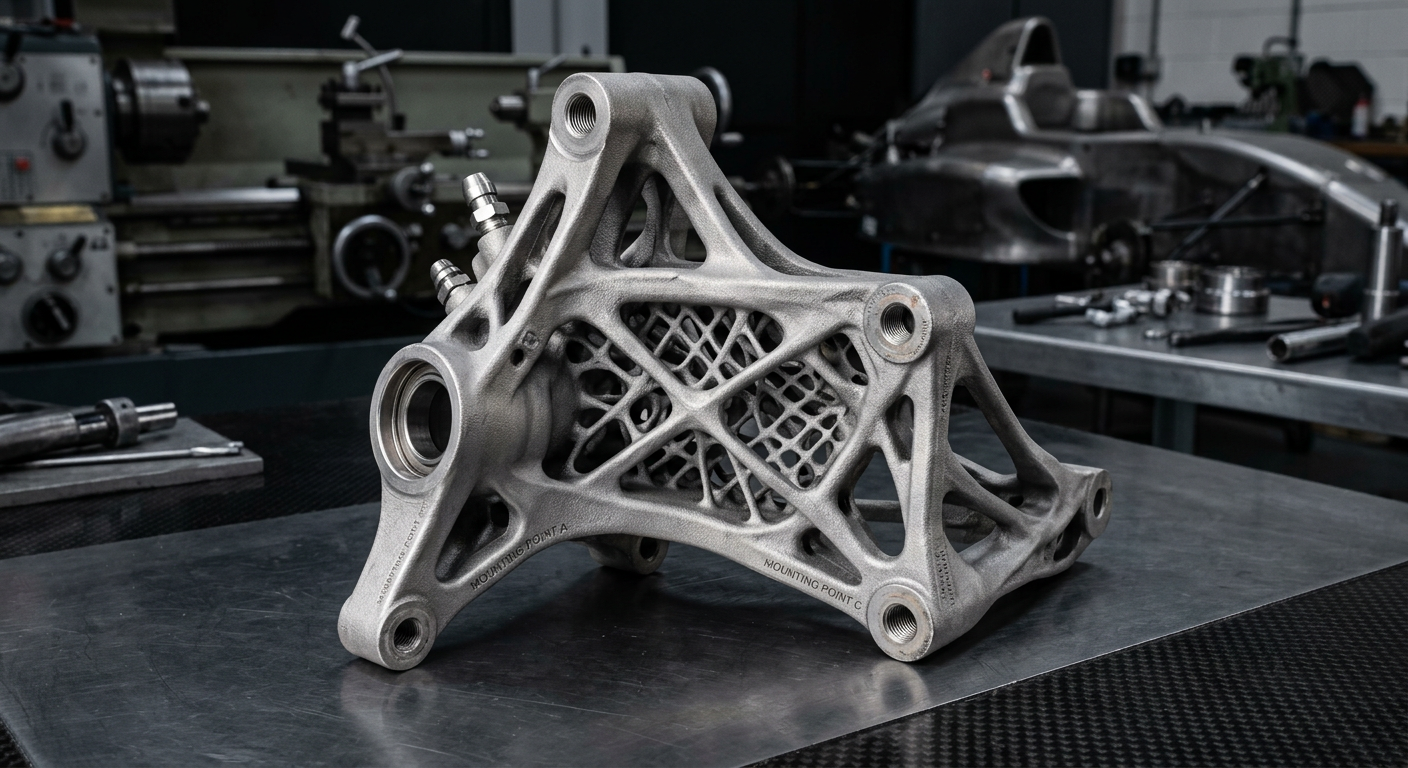
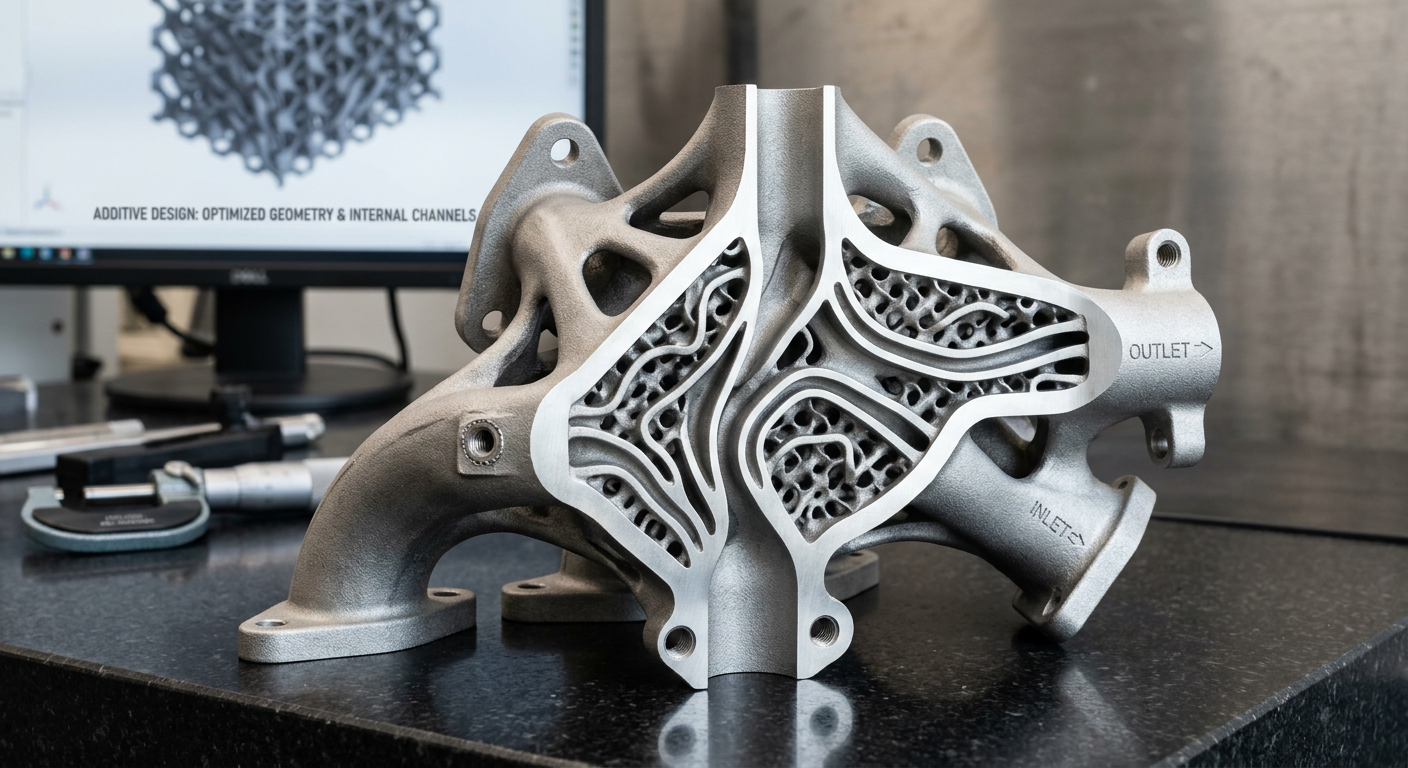
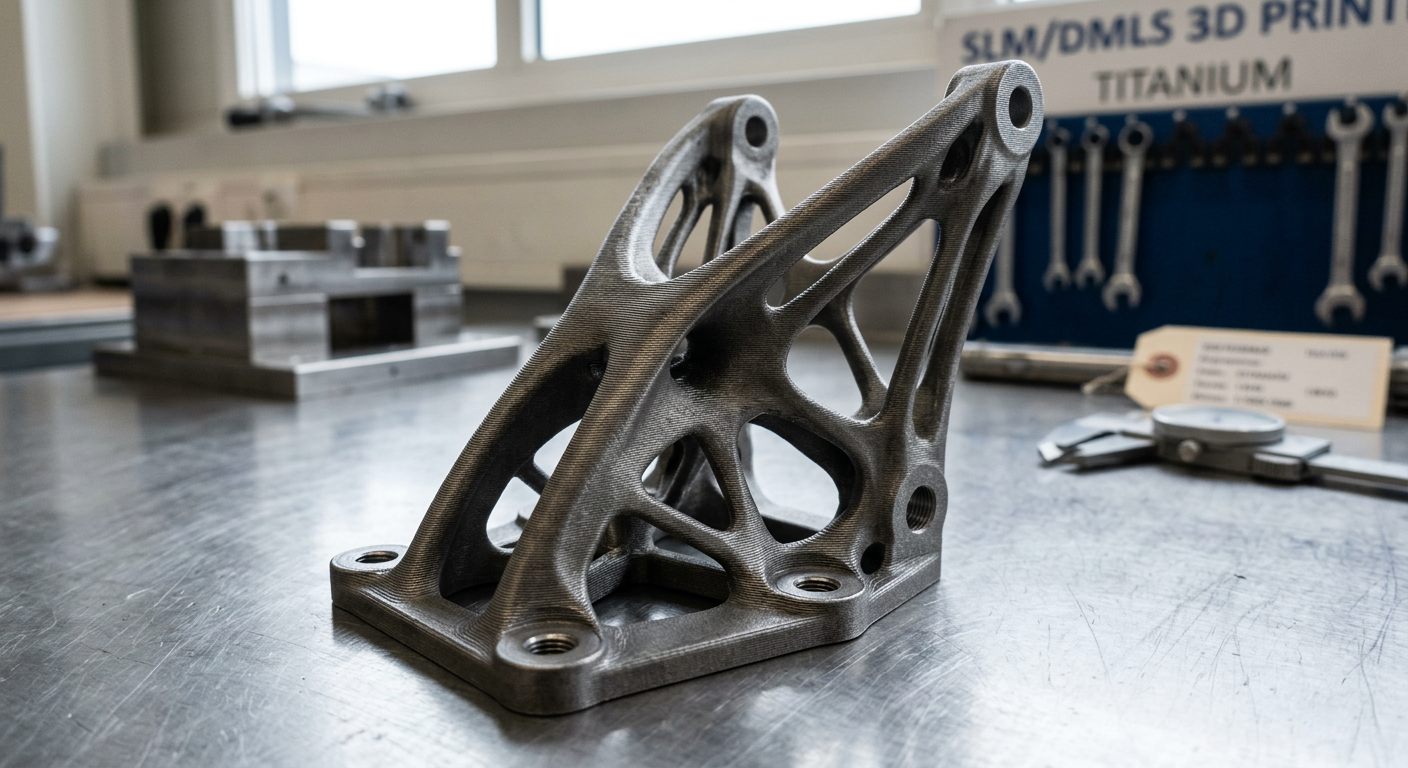
Titanium 3D printing delivers the strength-to-weight ratio aerospace demands without the material waste of billet machining. Ti6Al4V DMLS produces fully dense parts (99.5% theoretical density) at 993–1,055 MPa UTS — matching wrought titanium mechanical performance after stress relief. Build envelopes up to 400 × 400 × 450 mm accommodate brackets, actuator housings, hydraulic manifolds, and duct fittings. Topology optimization routinely achieves 30–60% mass reduction versus conventional machined equivalents. Compliant with AMS 4999, AS9100D quality management, and NADCAP heat treatment specifications.
Medical Implants
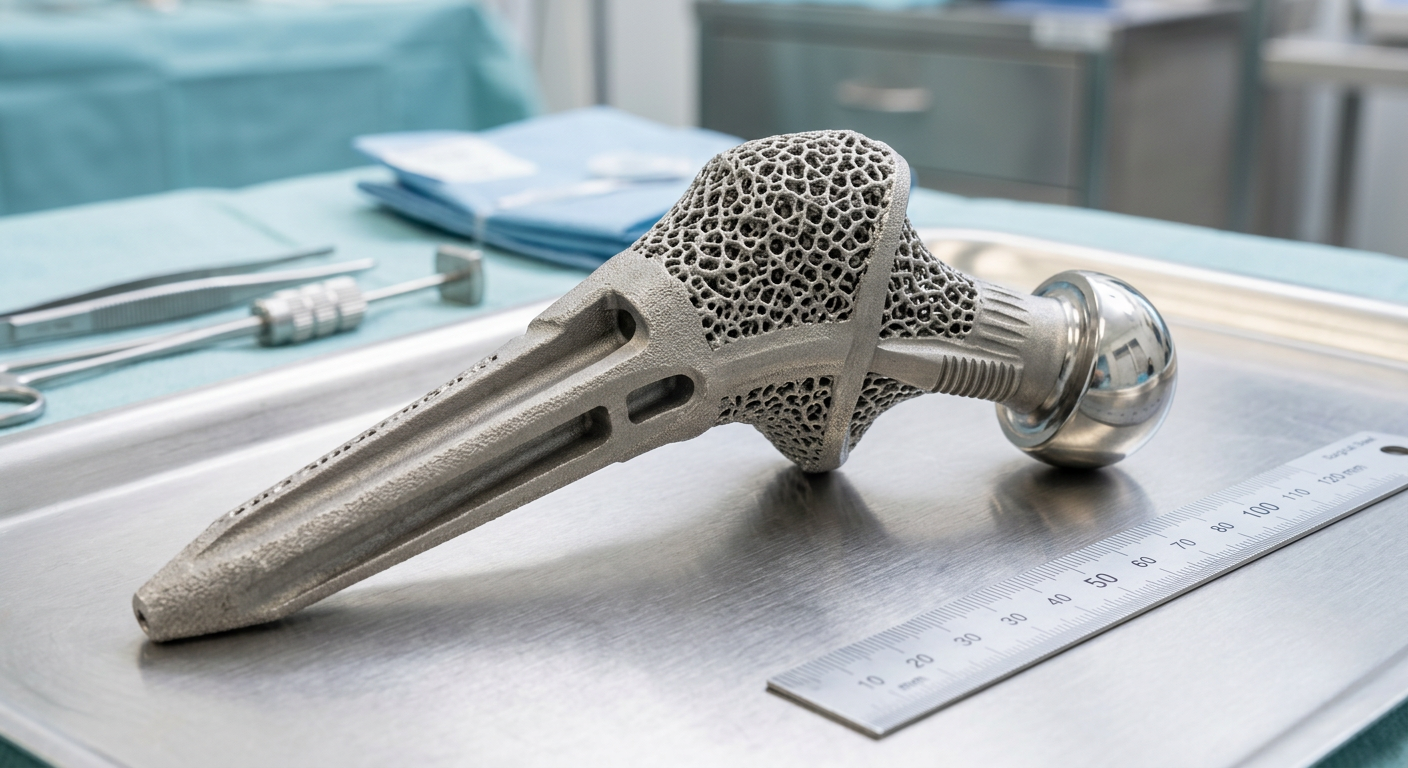
Medical-grade titanium printing uses Ti6Al4V ELI (extra-low interstitial), the material specified by ASTM F136 for surgical implants. The controlled interstitial content (oxygen ≤ 0.13%, nitrogen ≤ 0.05%) improves ductility and fracture toughness critical in cyclically loaded orthopedic implants. Porous lattice structures (40–80% porosity, 400–700 µm pore size) printed directly into implant surfaces promote osseointegration without bone grafts. Patient-specific implants from CT/MRI-derived STL files. ISO 13485 quality management. FDA 510(k) technical file support available.
Post-Processing & Finishing
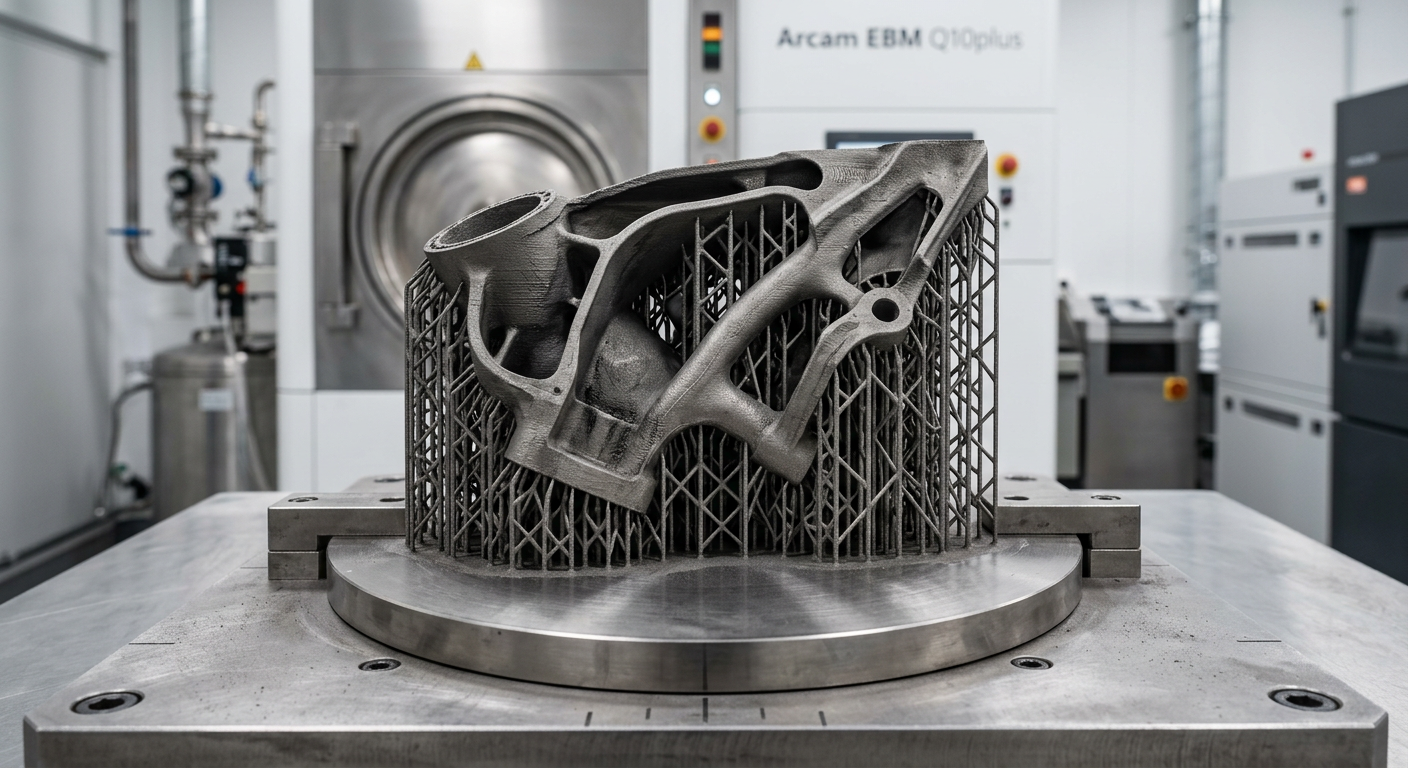
As-printed DMLS titanium contains residual stress and microporosity that must be addressed for structural applications. Hot isostatic pressing (HIP) at 900°C / 100 MPa eliminates subsurface porosity and achieves 100% density — required for fatigue-critical aerospace applications. Stress relief heat treatment (vacuum, 800°C) is standard for all parts before support removal. Post-processing services: CNC milling and turning to ±0.025 mm tolerance on critical surfaces, EDM for internal features, bead blasting (Ra 1.6–3.2 µm), electropolishing (Ra 0.4–0.8 µm), and Type II/III anodizing for color-coding and corrosion protection.
Specialty Alloys & Research
Beyond Ti6Al4V, the titanium alloy family offers properties tailored to specific applications: commercially pure Grade 2 (CP-Ti) for maximum corrosion resistance in chemical processing and marine environments; Ti-5Al-5V-5Mo-3Cr (Ti-5553) for ultra-high-strength landing gear and fasteners; metastable beta alloys (Ti-15V-3Cr-3Al-3Sn) for cold-formable sheet applications. We track available DMLS parameter sets across EOS M290, Trumpf TruPrint 1000, and SLM Solutions platforms — and connect researchers with service bureaus developing new alloy parameters for novel compositions.